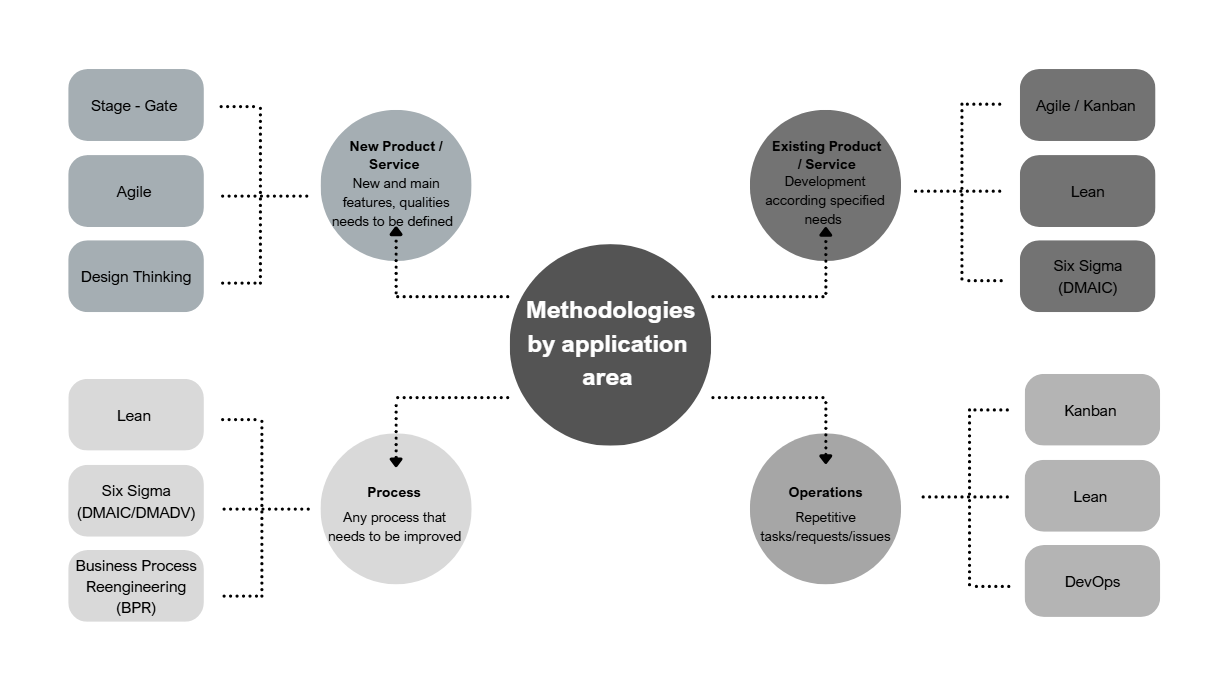
<?xml version="1.0" encoding="utf-8"?><feed xmlns="http://www.w3.org/2005/Atom" ><generator uri="https://jekyllrb.com/" version="3.10.0">Jekyll</generator><link href="https://raimondaz.github.io/feed.xml" rel="self" type="application/atom+xml" /><link href="https://raimondaz.github.io/" rel="alternate" type="text/html" /><updated>2026-04-22T13:21:25+00:00</updated><id>https://raimondaz.github.io/feed.xml</id><title type="html">Raimonda Žilinskaitė</title><subtitle>personal description</subtitle><author><name>{&quot;avatar&quot;=&gt;&quot;Raimonda Zilinskaite.jpg&quot;, &quot;name&quot;=&gt;nil, &quot;pronouns&quot;=&gt;nil, &quot;bio&quot;=&gt;&quot;With product and project management experience in IT, looking forward to developing innovative solutions in the Artificial Intelligence: GEN AI, ML fields.&quot;, &quot;location&quot;=&gt;&quot;Vilnius, Lithuania&quot;, &quot;employer&quot;=&gt;&quot;Vilnius University&quot;, &quot;uri&quot;=&gt;&quot;https://raimondaz.github.io&quot;, &quot;email&quot;=&gt;&quot;raimonda.zilinskaite@gmail.com&quot;, &quot;arxiv&quot;=&gt;nil, &quot;googlescholar&quot;=&gt;nil, &quot;impactstory&quot;=&gt;nil, &quot;orcid&quot;=&gt;nil, &quot;semantic&quot;=&gt;nil, &quot;pubmed&quot;=&gt;nil, &quot;researchgate&quot;=&gt;nil, &quot;bitbucket&quot;=&gt;nil, &quot;codepen&quot;=&gt;nil, &quot;dribbble&quot;=&gt;nil, &quot;github&quot;=&gt;nil, &quot;kaggle&quot;=&gt;nil, &quot;stackoverflow&quot;=&gt;nil, &quot;bluesky&quot;=&gt;nil, &quot;facebook&quot;=&gt;nil, &quot;flickr&quot;=&gt;nil, &quot;foursquare&quot;=&gt;nil, &quot;goodreads&quot;=&gt;nil, &quot;google_plus&quot;=&gt;nil, &quot;keybase&quot;=&gt;nil, &quot;instagram&quot;=&gt;nil, &quot;lastfm&quot;=&gt;nil, &quot;linkedin&quot;=&gt;nil, &quot;mastodon&quot;=&gt;nil, &quot;medium&quot;=&gt;nil, &quot;pinterest&quot;=&gt;nil, &quot;soundcloud&quot;=&gt;nil, &quot;steam&quot;=&gt;nil, &quot;telegram&quot;=&gt;nil, &quot;tumblr&quot;=&gt;nil, &quot;twitter&quot;=&gt;nil, &quot;vine&quot;=&gt;nil, &quot;weibo&quot;=&gt;nil, &quot;wikipedia&quot;=&gt;nil, &quot;xing&quot;=&gt;nil, &quot;youtube&quot;=&gt;nil, &quot;zhihu&quot;=&gt;nil}</name><email>raimonda.zilinskaite@gmail.com</email><uri>https://raimondaz.github.io</uri></author><entry><title type="html">Methodologies for product or service</title><link href="https://raimondaz.github.io/posts/2025/12/blog-post-12/" rel="alternate" type="text/html" title="Methodologies for product or service" /><published>2025-11-25T00:00:00+00:00</published><updated>2025-11-25T00:00:00+00:00</updated><id>https://raimondaz.github.io/posts/2025/12/blog-post-12</id><content type="html" xml:base="https://raimondaz.github.io/posts/2025/12/blog-post-12/"><![CDATA[<p>Difeerent methodologies could be applied depending on area and problem type. Each of it serves best when selected correctly.</p>

<p><br /><img src="/images/Methodologies_upd.png" /><br /></p>]]></content><author><name>{&quot;avatar&quot;=&gt;&quot;Raimonda Zilinskaite.jpg&quot;, &quot;name&quot;=&gt;nil, &quot;pronouns&quot;=&gt;nil, &quot;bio&quot;=&gt;&quot;With product and project management experience in IT, looking forward to developing innovative solutions in the Artificial Intelligence: GEN AI, ML fields.&quot;, &quot;location&quot;=&gt;&quot;Vilnius, Lithuania&quot;, &quot;employer&quot;=&gt;&quot;Vilnius University&quot;, &quot;uri&quot;=&gt;&quot;https://raimondaz.github.io&quot;, &quot;email&quot;=&gt;&quot;raimonda.zilinskaite@gmail.com&quot;, &quot;arxiv&quot;=&gt;nil, &quot;googlescholar&quot;=&gt;nil, &quot;impactstory&quot;=&gt;nil, &quot;orcid&quot;=&gt;nil, &quot;semantic&quot;=&gt;nil, &quot;pubmed&quot;=&gt;nil, &quot;researchgate&quot;=&gt;nil, &quot;bitbucket&quot;=&gt;nil, &quot;codepen&quot;=&gt;nil, &quot;dribbble&quot;=&gt;nil, &quot;github&quot;=&gt;nil, &quot;kaggle&quot;=&gt;nil, &quot;stackoverflow&quot;=&gt;nil, &quot;bluesky&quot;=&gt;nil, &quot;facebook&quot;=&gt;nil, &quot;flickr&quot;=&gt;nil, &quot;foursquare&quot;=&gt;nil, &quot;goodreads&quot;=&gt;nil, &quot;google_plus&quot;=&gt;nil, &quot;keybase&quot;=&gt;nil, &quot;instagram&quot;=&gt;nil, &quot;lastfm&quot;=&gt;nil, &quot;linkedin&quot;=&gt;nil, &quot;mastodon&quot;=&gt;nil, &quot;medium&quot;=&gt;nil, &quot;pinterest&quot;=&gt;nil, &quot;soundcloud&quot;=&gt;nil, &quot;steam&quot;=&gt;nil, &quot;telegram&quot;=&gt;nil, &quot;tumblr&quot;=&gt;nil, &quot;twitter&quot;=&gt;nil, &quot;vine&quot;=&gt;nil, &quot;weibo&quot;=&gt;nil, &quot;wikipedia&quot;=&gt;nil, &quot;xing&quot;=&gt;nil, &quot;youtube&quot;=&gt;nil, &quot;zhihu&quot;=&gt;nil}</name><email>raimonda.zilinskaite@gmail.com</email><uri>https://raimondaz.github.io</uri></author><category term="cool posts" /><category term="category1" /><category term="category2" /><summary type="html"><![CDATA[Difeerent methodologies could be applied depending on area and problem type. Each of it serves best when selected correctly.]]></summary></entry><entry><title type="html">Overview and key aspects of the product management</title><link href="https://raimondaz.github.io/posts/2025/11/blog-post-11/" rel="alternate" type="text/html" title="Overview and key aspects of the product management" /><published>2025-11-12T00:00:00+00:00</published><updated>2025-11-12T00:00:00+00:00</updated><id>https://raimondaz.github.io/posts/2025/11/blog-post-11</id><content type="html" xml:base="https://raimondaz.github.io/posts/2025/11/blog-post-11/"><![CDATA[<p>Product management is complex, as it covers different areas of knowledge and skills. To master it takes time and practice. With the overview you can step into the shoes of the product manager role and practically do some exercises in order to understand and get insights into product/service creation and development.</p>

<p><img width="863" height="756" alt="image" src="https://github.com/user-attachments/assets/8ce34313-fb53-4464-8d83-740ebe2db336" /></p>]]></content><author><name>{&quot;avatar&quot;=&gt;&quot;Raimonda Zilinskaite.jpg&quot;, &quot;name&quot;=&gt;nil, &quot;pronouns&quot;=&gt;nil, &quot;bio&quot;=&gt;&quot;With product and project management experience in IT, looking forward to developing innovative solutions in the Artificial Intelligence: GEN AI, ML fields.&quot;, &quot;location&quot;=&gt;&quot;Vilnius, Lithuania&quot;, &quot;employer&quot;=&gt;&quot;Vilnius University&quot;, &quot;uri&quot;=&gt;&quot;https://raimondaz.github.io&quot;, &quot;email&quot;=&gt;&quot;raimonda.zilinskaite@gmail.com&quot;, &quot;arxiv&quot;=&gt;nil, &quot;googlescholar&quot;=&gt;nil, &quot;impactstory&quot;=&gt;nil, &quot;orcid&quot;=&gt;nil, &quot;semantic&quot;=&gt;nil, &quot;pubmed&quot;=&gt;nil, &quot;researchgate&quot;=&gt;nil, &quot;bitbucket&quot;=&gt;nil, &quot;codepen&quot;=&gt;nil, &quot;dribbble&quot;=&gt;nil, &quot;github&quot;=&gt;nil, &quot;kaggle&quot;=&gt;nil, &quot;stackoverflow&quot;=&gt;nil, &quot;bluesky&quot;=&gt;nil, &quot;facebook&quot;=&gt;nil, &quot;flickr&quot;=&gt;nil, &quot;foursquare&quot;=&gt;nil, &quot;goodreads&quot;=&gt;nil, &quot;google_plus&quot;=&gt;nil, &quot;keybase&quot;=&gt;nil, &quot;instagram&quot;=&gt;nil, &quot;lastfm&quot;=&gt;nil, &quot;linkedin&quot;=&gt;nil, &quot;mastodon&quot;=&gt;nil, &quot;medium&quot;=&gt;nil, &quot;pinterest&quot;=&gt;nil, &quot;soundcloud&quot;=&gt;nil, &quot;steam&quot;=&gt;nil, &quot;telegram&quot;=&gt;nil, &quot;tumblr&quot;=&gt;nil, &quot;twitter&quot;=&gt;nil, &quot;vine&quot;=&gt;nil, &quot;weibo&quot;=&gt;nil, &quot;wikipedia&quot;=&gt;nil, &quot;xing&quot;=&gt;nil, &quot;youtube&quot;=&gt;nil, &quot;zhihu&quot;=&gt;nil}</name><email>raimonda.zilinskaite@gmail.com</email><uri>https://raimondaz.github.io</uri></author><category term="cool posts" /><category term="category1" /><category term="category2" /><summary type="html"><![CDATA[Product management is complex, as it covers different areas of knowledge and skills. To master it takes time and practice. With the overview you can step into the shoes of the product manager role and practically do some exercises in order to understand and get insights into product/service creation and development.]]></summary></entry><entry><title type="html">Unveiling the Dimensions of Product Differentiation Strategies</title><link href="https://raimondaz.github.io/posts/2025/05/blog-post-10/" rel="alternate" type="text/html" title="Unveiling the Dimensions of Product Differentiation Strategies" /><published>2025-06-05T00:00:00+00:00</published><updated>2025-06-05T00:00:00+00:00</updated><id>https://raimondaz.github.io/posts/2025/05/blog-post-10</id><content type="html" xml:base="https://raimondaz.github.io/posts/2025/05/blog-post-10/"><![CDATA[<p>In a crowded market, product differentiation is the key to standing out and winning customer loyalty. However, differentiation is not a single-point solution; it operates across multiple vectors, each representing a continuum of opportunities.</p>

<p>Richard Rumelt:
“Identify a unique strength that your company/product has that aligns well with the current opportunities in your environment. Then leverage that strength in a way that others cannot easily replicate. Focus on what sets you apart and use it to create a sustainable competitive advantage.”</p>

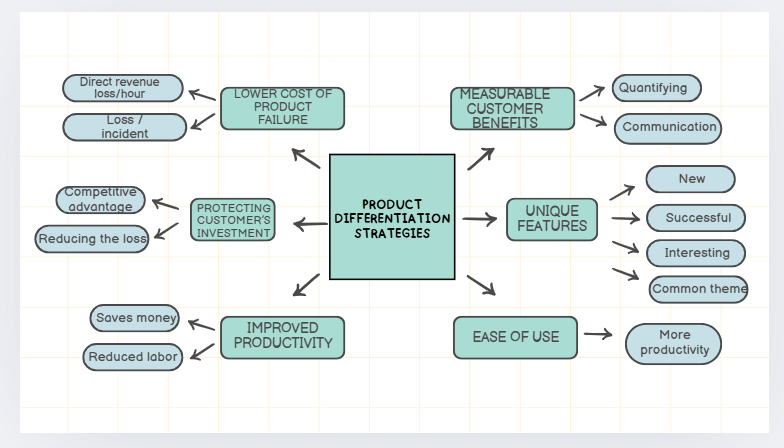
<p>Let’s explore the five dimensions of product differentiation strategies illustrated in the accompanying diagram.</p>

<p><br /><img src="/images/Product differentiation.png" /><br /></p>

<p><strong>1. Lower Cost of Product Failure</strong></p>

<p>This vector revolves around reducing the financial impact of failure for the customer. On one end, it targets direct revenue loss per hour, and on the other, it addresses the costs associated with incidents. Products designed to minimize the risk of downtime or mitigate failure-related costs offer a compelling value proposition for businesses focused on reliability and resilience.</p>

<p><strong>2. Measurable Customer Benefits</strong></p>

<p>This dimension emphasizes quantifiable advantages that customers derive from a product. It spans from effective communication of these benefits to showcasing measurable improvements, such as productivity gains or cost savings. Products that clearly articulate and prove their value tend to resonate deeply with their audience, building trust and adoption.</p>

<p><strong>3. Unique Features</strong></p>

<p>Uniqueness drives differentiation when executed well. The spectrum here ranges from introducing entirely new capabilities to refining existing ones in successful and interesting ways. A common theme often emerges, tying unique features to enhanced functionality or desirability. These innovations need to be compelling enough to shift customer preferences.</p>

<p><strong>4. Ease of Use</strong></p>

<p>This vector highlights the usability of a product, extending from intuitive design to enabling higher productivity through streamlined operations. Products that reduce complexity not only improve the user experience but also help customers achieve more with less effort, fostering loyalty and satisfaction.</p>

<p><strong>5. Protecting Customer’s Investment</strong></p>

<p>Products that protect customer investments provide a competitive edge. This dimension spans competitive advantage to reducing losses associated with product lifecycle or operational mishaps. Solutions that safeguard the customer’s resources build trust and long-term relationships.</p>

<p><strong>6. Improved Productivity</strong></p>

<p>Lastly, the productivity vector underscores solutions that enhance efficiency. From saving time and money to reducing labor-intensive processes, this dimension aligns closely with businesses looking to optimize operations. A focus on productivity not only makes a product indispensable but also helps justify its cost.</p>

<p>By understanding and leveraging these differentiation vectors, businesses can craft products that not only meet but exceed customer expectations across multiple dimensions. This strategic depth ensures a stronger market position and enduring customer relationships.</p>]]></content><author><name>{&quot;avatar&quot;=&gt;&quot;Raimonda Zilinskaite.jpg&quot;, &quot;name&quot;=&gt;nil, &quot;pronouns&quot;=&gt;nil, &quot;bio&quot;=&gt;&quot;With product and project management experience in IT, looking forward to developing innovative solutions in the Artificial Intelligence: GEN AI, ML fields.&quot;, &quot;location&quot;=&gt;&quot;Vilnius, Lithuania&quot;, &quot;employer&quot;=&gt;&quot;Vilnius University&quot;, &quot;uri&quot;=&gt;&quot;https://raimondaz.github.io&quot;, &quot;email&quot;=&gt;&quot;raimonda.zilinskaite@gmail.com&quot;, &quot;arxiv&quot;=&gt;nil, &quot;googlescholar&quot;=&gt;nil, &quot;impactstory&quot;=&gt;nil, &quot;orcid&quot;=&gt;nil, &quot;semantic&quot;=&gt;nil, &quot;pubmed&quot;=&gt;nil, &quot;researchgate&quot;=&gt;nil, &quot;bitbucket&quot;=&gt;nil, &quot;codepen&quot;=&gt;nil, &quot;dribbble&quot;=&gt;nil, &quot;github&quot;=&gt;nil, &quot;kaggle&quot;=&gt;nil, &quot;stackoverflow&quot;=&gt;nil, &quot;bluesky&quot;=&gt;nil, &quot;facebook&quot;=&gt;nil, &quot;flickr&quot;=&gt;nil, &quot;foursquare&quot;=&gt;nil, &quot;goodreads&quot;=&gt;nil, &quot;google_plus&quot;=&gt;nil, &quot;keybase&quot;=&gt;nil, &quot;instagram&quot;=&gt;nil, &quot;lastfm&quot;=&gt;nil, &quot;linkedin&quot;=&gt;nil, &quot;mastodon&quot;=&gt;nil, &quot;medium&quot;=&gt;nil, &quot;pinterest&quot;=&gt;nil, &quot;soundcloud&quot;=&gt;nil, &quot;steam&quot;=&gt;nil, &quot;telegram&quot;=&gt;nil, &quot;tumblr&quot;=&gt;nil, &quot;twitter&quot;=&gt;nil, &quot;vine&quot;=&gt;nil, &quot;weibo&quot;=&gt;nil, &quot;wikipedia&quot;=&gt;nil, &quot;xing&quot;=&gt;nil, &quot;youtube&quot;=&gt;nil, &quot;zhihu&quot;=&gt;nil}</name><email>raimonda.zilinskaite@gmail.com</email><uri>https://raimondaz.github.io</uri></author><category term="cool posts" /><category term="category1" /><category term="category2" /><summary type="html"><![CDATA[In a crowded market, product differentiation is the key to standing out and winning customer loyalty. However, differentiation is not a single-point solution; it operates across multiple vectors, each representing a continuum of opportunities.]]></summary></entry><entry><title type="html">Growth through Innovation: Lessons from AI and Machine Learning</title><link href="https://raimondaz.github.io/posts/2025/05/blog-post-9/" rel="alternate" type="text/html" title="Growth through Innovation: Lessons from AI and Machine Learning" /><published>2025-05-16T00:00:00+00:00</published><updated>2025-05-16T00:00:00+00:00</updated><id>https://raimondaz.github.io/posts/2025/05/blog-post-9</id><content type="html" xml:base="https://raimondaz.github.io/posts/2025/05/blog-post-9/"><![CDATA[<p>Growth through Innovation: Lessons from AI and Machine Learning</p>

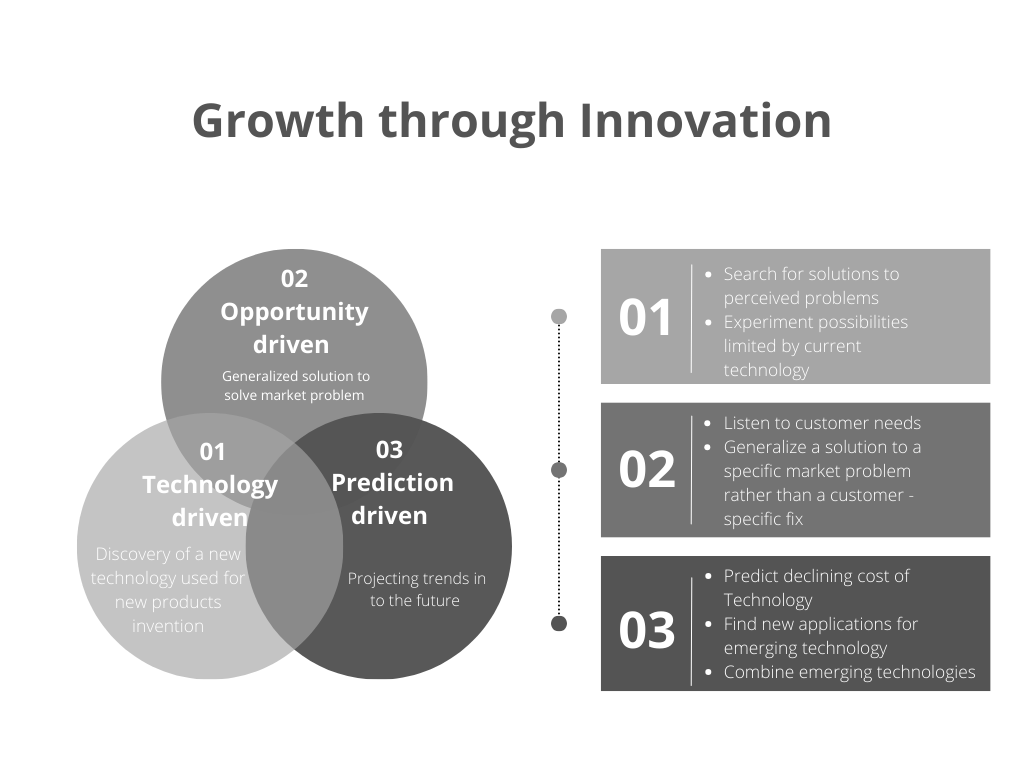
<p>Innovation is the driving force behind technological progress, helping industries solve pressing problems, seize opportunities, and prepare for the future. Let’s explore how innovation in the AI and machine learning (ML) space mirrors the three growth pathways: Technology-driven, Opportunity-driven, and Prediction-driven.</p>

<p><br /><img src="/images/Growth through Innovation.png" /><br /></p>

<p><strong>01 Technology-Driven Innovation</strong>
This type of innovation originates from breakthroughs in technology that pave the way for new applications. In AI, the discovery of neural networks and deep learning frameworks like TensorFlow and PyTorch exemplifies technology-driven growth.</p>

<p>Example:
The rise of generative AI has its roots in advancements like Transformer architectures (e.g., GPT, BERT). These breakthroughs led to applications in text generation, image creation (e.g., DALL·E), and even drug discovery through molecular property prediction.</p>

<p>Key Approach:
Search for solutions to perceived problems using cutting-edge technology.</p>

<p>Experiment within the possibilities offered by the current state of technology.</p>

<p>Impact: The leap in generative AI capabilities is reshaping industries, from automating creative content production to generating new protein structures for pharmaceuticals.</p>

<p><strong>02 Opportunity-Driven Innovation</strong></p>

<p>Here, the focus shifts to listening to customer needs and generalizing solutions to market problems, rather than creating fixes for specific cases.</p>

<p>Example:
Take customer personalization in e-commerce. Companies like Amazon and Netflix use recommendation engines powered by AI to understand user preferences and deliver relevant suggestions. This general solution addresses a market-wide problem of improving customer retention and satisfaction.</p>

<p>Key Approach:
Listen to customer needs.</p>

<p>Develop generalized solutions applicable to a broad range of problems.</p>

<p>Impact: Opportunity-driven AI innovations have made personalized experiences standard across industries like retail, entertainment, and education. From chatbot assistance to tailored financial advice, these solutions create consistent value.</p>

<p><strong>03 Prediction-Driven Innovation</strong></p>

<p>Prediction-driven growth involves projecting future trends and aligning technology development with them. This type of innovation thrives on identifying declining costs of existing technologies and combining them for new applications.</p>

<p>Example:
Autonomous vehicles are a prime example. Companies like Tesla, Waymo, and others have capitalized on the predicted decline in costs of sensors, processors, and edge AI capabilities. By combining technologies such as computer vision, LIDAR, and real-time decision-making algorithms, they are building the future of transportation.</p>

<p>Key Approach:
Predict technology cost trends.</p>

<p>Find novel applications for emerging technologies.</p>

<p>Combine multiple technological breakthroughs to solve complex problems.</p>

<p>Impact: Prediction-driven AI is steering the world toward more efficient and sustainable systems in transportation, agriculture, and energy management.</p>

<p>Conclusion: AI and ML as a Case Study for Innovation
AI and ML vividly demonstrate how the three innovation pathways can complement each other:</p>

<p>Technology-driven: Discoveries in deep learning frameworks gave us tools like GPT and DALL·E.</p>

<p>Opportunity-driven: Personalization algorithms redefined customer experiences across sectors.</p>

<p>Prediction-driven: Autonomous systems and edge AI leveraged declining costs to transform industries.</p>

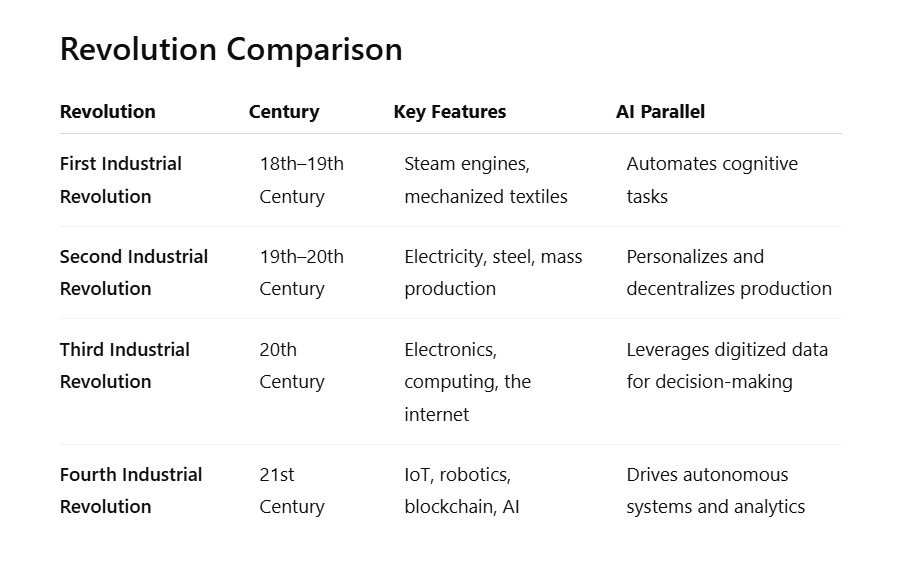
<p>By balancing technology breakthroughs with market opportunities and foresight, AI innovators continue to solve problems and create value at an unprecedented pace.</p>]]></content><author><name>{&quot;avatar&quot;=&gt;&quot;Raimonda Zilinskaite.jpg&quot;, &quot;name&quot;=&gt;nil, &quot;pronouns&quot;=&gt;nil, &quot;bio&quot;=&gt;&quot;With product and project management experience in IT, looking forward to developing innovative solutions in the Artificial Intelligence: GEN AI, ML fields.&quot;, &quot;location&quot;=&gt;&quot;Vilnius, Lithuania&quot;, &quot;employer&quot;=&gt;&quot;Vilnius University&quot;, &quot;uri&quot;=&gt;&quot;https://raimondaz.github.io&quot;, &quot;email&quot;=&gt;&quot;raimonda.zilinskaite@gmail.com&quot;, &quot;arxiv&quot;=&gt;nil, &quot;googlescholar&quot;=&gt;nil, &quot;impactstory&quot;=&gt;nil, &quot;orcid&quot;=&gt;nil, &quot;semantic&quot;=&gt;nil, &quot;pubmed&quot;=&gt;nil, &quot;researchgate&quot;=&gt;nil, &quot;bitbucket&quot;=&gt;nil, &quot;codepen&quot;=&gt;nil, &quot;dribbble&quot;=&gt;nil, &quot;github&quot;=&gt;nil, &quot;kaggle&quot;=&gt;nil, &quot;stackoverflow&quot;=&gt;nil, &quot;bluesky&quot;=&gt;nil, &quot;facebook&quot;=&gt;nil, &quot;flickr&quot;=&gt;nil, &quot;foursquare&quot;=&gt;nil, &quot;goodreads&quot;=&gt;nil, &quot;google_plus&quot;=&gt;nil, &quot;keybase&quot;=&gt;nil, &quot;instagram&quot;=&gt;nil, &quot;lastfm&quot;=&gt;nil, &quot;linkedin&quot;=&gt;nil, &quot;mastodon&quot;=&gt;nil, &quot;medium&quot;=&gt;nil, &quot;pinterest&quot;=&gt;nil, &quot;soundcloud&quot;=&gt;nil, &quot;steam&quot;=&gt;nil, &quot;telegram&quot;=&gt;nil, &quot;tumblr&quot;=&gt;nil, &quot;twitter&quot;=&gt;nil, &quot;vine&quot;=&gt;nil, &quot;weibo&quot;=&gt;nil, &quot;wikipedia&quot;=&gt;nil, &quot;xing&quot;=&gt;nil, &quot;youtube&quot;=&gt;nil, &quot;zhihu&quot;=&gt;nil}</name><email>raimonda.zilinskaite@gmail.com</email><uri>https://raimondaz.github.io</uri></author><category term="cool posts" /><category term="category1" /><category term="category2" /><summary type="html"><![CDATA[Growth through Innovation: Lessons from AI and Machine Learning]]></summary></entry><entry><title type="html">The Industrial Revolutions and AI: Lessons for the 21st Century</title><link href="https://raimondaz.github.io/posts/2025/05/blog-post-8/" rel="alternate" type="text/html" title="The Industrial Revolutions and AI: Lessons for the 21st Century" /><published>2025-05-13T00:00:00+00:00</published><updated>2025-05-13T00:00:00+00:00</updated><id>https://raimondaz.github.io/posts/2025/05/blog-post-8</id><content type="html" xml:base="https://raimondaz.github.io/posts/2025/05/blog-post-8/"><![CDATA[<p>Four industrial revolutions have reshaped societies, economies, and cultures. Today, AI represents the next transformative leap, with clear parallels to those past eras.</p>

<p>Revolution Comparison</p>

<p><br /><img src="/images/AI and industry.png" /><br /></p>

<p><strong>AI’s Unique Impact</strong></p>

<p>Speed: Evolves within years, not decades.</p>

<p>Global Reach: Impacts industries and regions simultaneously.</p>

<p>Complexity: Raises new ethical and cultural challenges.</p>

<p><strong>Lessons for AI Development</strong></p>

<p>Prepare for Labor Shifts: Invest in AI literacy and reskilling programs.</p>

<p>Promote Inclusivity: Ensure benefits are equitably distributed.</p>

<p>Ensure Fairness: Establish ethical frameworks to address bias and accountability.</p>

<p>Collaborate Globally: Forge public-private partnerships for responsible AI deployment.</p>

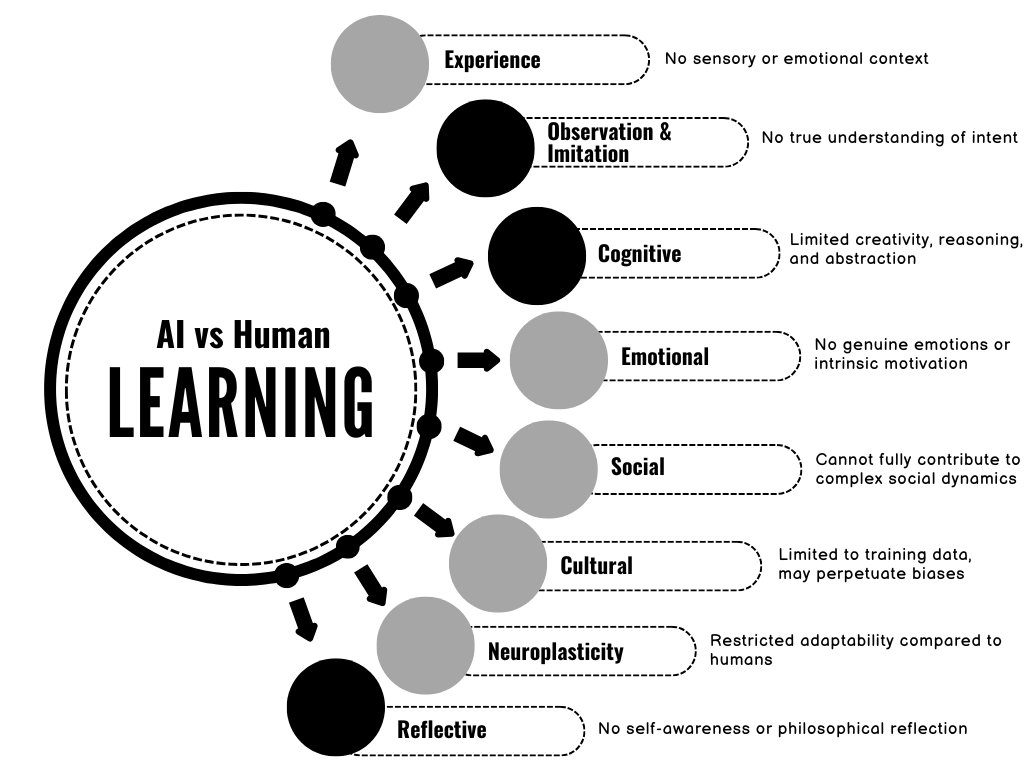
<p>Focus on Sustainability: Design energy-efficient, environmentally conscious AI solutions.</p>]]></content><author><name>{&quot;avatar&quot;=&gt;&quot;Raimonda Zilinskaite.jpg&quot;, &quot;name&quot;=&gt;nil, &quot;pronouns&quot;=&gt;nil, &quot;bio&quot;=&gt;&quot;With product and project management experience in IT, looking forward to developing innovative solutions in the Artificial Intelligence: GEN AI, ML fields.&quot;, &quot;location&quot;=&gt;&quot;Vilnius, Lithuania&quot;, &quot;employer&quot;=&gt;&quot;Vilnius University&quot;, &quot;uri&quot;=&gt;&quot;https://raimondaz.github.io&quot;, &quot;email&quot;=&gt;&quot;raimonda.zilinskaite@gmail.com&quot;, &quot;arxiv&quot;=&gt;nil, &quot;googlescholar&quot;=&gt;nil, &quot;impactstory&quot;=&gt;nil, &quot;orcid&quot;=&gt;nil, &quot;semantic&quot;=&gt;nil, &quot;pubmed&quot;=&gt;nil, &quot;researchgate&quot;=&gt;nil, &quot;bitbucket&quot;=&gt;nil, &quot;codepen&quot;=&gt;nil, &quot;dribbble&quot;=&gt;nil, &quot;github&quot;=&gt;nil, &quot;kaggle&quot;=&gt;nil, &quot;stackoverflow&quot;=&gt;nil, &quot;bluesky&quot;=&gt;nil, &quot;facebook&quot;=&gt;nil, &quot;flickr&quot;=&gt;nil, &quot;foursquare&quot;=&gt;nil, &quot;goodreads&quot;=&gt;nil, &quot;google_plus&quot;=&gt;nil, &quot;keybase&quot;=&gt;nil, &quot;instagram&quot;=&gt;nil, &quot;lastfm&quot;=&gt;nil, &quot;linkedin&quot;=&gt;nil, &quot;mastodon&quot;=&gt;nil, &quot;medium&quot;=&gt;nil, &quot;pinterest&quot;=&gt;nil, &quot;soundcloud&quot;=&gt;nil, &quot;steam&quot;=&gt;nil, &quot;telegram&quot;=&gt;nil, &quot;tumblr&quot;=&gt;nil, &quot;twitter&quot;=&gt;nil, &quot;vine&quot;=&gt;nil, &quot;weibo&quot;=&gt;nil, &quot;wikipedia&quot;=&gt;nil, &quot;xing&quot;=&gt;nil, &quot;youtube&quot;=&gt;nil, &quot;zhihu&quot;=&gt;nil}</name><email>raimonda.zilinskaite@gmail.com</email><uri>https://raimondaz.github.io</uri></author><category term="cool posts" /><category term="category1" /><category term="category2" /><summary type="html"><![CDATA[Four industrial revolutions have reshaped societies, economies, and cultures. Today, AI represents the next transformative leap, with clear parallels to those past eras.]]></summary></entry><entry><title type="html">AI and Human Learning: A Double-Edged Sword</title><link href="https://raimondaz.github.io/posts/2024/12/blog-post-7/" rel="alternate" type="text/html" title="AI and Human Learning: A Double-Edged Sword" /><published>2024-12-18T00:00:00+00:00</published><updated>2024-12-18T00:00:00+00:00</updated><id>https://raimondaz.github.io/posts/2024/12/blog-post-7</id><content type="html" xml:base="https://raimondaz.github.io/posts/2024/12/blog-post-7/"><![CDATA[<p>Artificial Intelligence (AI) has come a long way in mimicking the human learning process. From its ability to observe, imitate, and store information to analyzing vast amounts of data and finding intricate patterns, AI has reached impressive heights. With human-designed models, AI can reflect and adapt in ways that are undeniably sophisticated. However, despite these advances, there are fundamental differences between AI’s capabilities and the richness of human experience, learning, and adaptability.</p>

<p><br /><img src="/images/AI and Human Learning.png" /><br /></p>

<p>The Strengths of Human Learning
Humans are unique in their ability to learn through real-world experiences. Our learning is shaped by sensory inputs, emotional responses, social interactions, and the environment in which we grow up. Whether it’s the classroom, the workplace, or simply nature itself, humans absorb knowledge in a deeply nuanced and context-specific way. Additionally, neuroplasticity—the brain’s remarkable ability to change and adapt—allows us to rewire ourselves in response to new information, challenges, or experiences.</p>

<p>AI, by contrast, lacks this rich, embodied experience. It doesn’t sense the world, doesn’t experience emotions, and doesn’t interact socially like humans do. AI’s observations are devoid of meaning, intent, or the self-awareness that comes with human consciousness. It does not have curiosity or motivation to learn for the sake of learning. Moreover, AI’s adaptability is restricted by the algorithms humans create for it, leaving little room for true flexibility or personal growth in the way humans experience.</p>

<p>The Gaps AI Faces
While AI excels at processing information and recognizing patterns, it is inherently limited in several crucial areas. Without real-world experiences, it cannot grasp context in the same way humans do. Human nuances—such as cultural, emotional, or social contexts—are largely lost on AI. This lack of understanding creates a gap in the way AI processes and reacts to human situations, making it difficult for AI to offer the same depth of insight and judgment that a human could.</p>

<p>Another issue is the inherent limitations in AI’s plasticity. Unlike humans, who can continuously adapt and rewire their brains through experiences, AI is confined by the algorithms that underpin it. These algorithms are, ultimately, a product of human design, limiting AI’s capacity for true innovation or transformation beyond what it has been programmed to do.</p>

<p>Challenges and Ethical Considerations
As AI continues to evolve, it brings about new challenges and ethical concerns that humans must navigate. One of the key issues is skill atrophy. As AI tools take over tasks like problem-solving, writing, and calculation, humans risk losing the very skills they once relied on to thrive. This dependency on AI for routine tasks could erode creativity, critical thinking, and problem-solving abilities over time.</p>

<p>Another pressing concern is privacy. With AI systems constantly collecting and analyzing personal data, individual freedoms may be compromised, and the risk of bias or discrimination is heightened. Since AI systems are trained on existing datasets, these biases can be ingrained and perpetuated, leading to unfair outcomes in decision-making processes.</p>

<p>Moreover, AI lacks the human judgment that is often necessary to make decisions that involve complex moral or ethical considerations. This is particularly concerning when AI is used in sensitive areas, such as healthcare or criminal justice, where decisions can have life-altering consequences.</p>

<p>The rise of deep fakes is another issue—AI’s ability to create realistic but entirely fabricated content can be used to manipulate public opinion or spread false information, causing widespread harm. The absence of accountability for these actions poses further ethical dilemmas.</p>

<p>Additionally, AI’s environmental footprint cannot be ignored. The rare earth materials required to build AI systems have significant ecological implications, and AI’s consumption of energy is growing at a rapid rate. Furthermore, not everyone has equal access to these powerful tools, leading to a digital divide that could exacerbate inequality.</p>

<p>The Potential of AI in Education
Despite these challenges, AI offers tremendous potential for transforming the way we learn. By personalizing learning experiences, AI can cater to individual needs, allowing students to progress at their own pace. Intelligent tutoring systems can provide immediate feedback and assessment, helping learners understand concepts more deeply.</p>

<p>AI can enhance accessibility for students with diverse learning needs, providing tailored resources and support. It can assist educators by automating administrative tasks, allowing them more time to focus on teaching. AI can also foster engagement through gamification, making learning more interactive and motivating.</p>

<p>Through learning analytics, AI can track students’ progress and help identify areas where they may be struggling, enabling timely interventions. Collaboration tools powered by AI can also create opportunities for global learning and the sharing of knowledge across geographical and cultural boundaries.</p>

<p>Moreover, AI’s ability to facilitate lifelong learning is one of its most promising features. By offering low-cost, scalable platforms, AI can reach remote and underserved communities, democratizing education in ways that were previously unimaginable.</p>

<p>Conclusion: Striking a Balance
AI has the potential to revolutionize learning, making it more personalized, accessible, and scalable. However, as we integrate AI into our daily lives and educational systems, we must remain aware of the limitations and ethical implications. The key will be finding a balance—leveraging AI’s strengths while also acknowledging the irreplaceable value of human experience, judgment, and adaptability.</p>

<p>By addressing the challenges of skill atrophy, privacy, bias, and environmental impact, and by ensuring equitable access to AI, we can create a future where AI complements human learning rather than undermines it. AI has the potential to empower us, but only if we guide its development responsibly and with foresight.</p>]]></content><author><name>{&quot;avatar&quot;=&gt;&quot;Raimonda Zilinskaite.jpg&quot;, &quot;name&quot;=&gt;nil, &quot;pronouns&quot;=&gt;nil, &quot;bio&quot;=&gt;&quot;With product and project management experience in IT, looking forward to developing innovative solutions in the Artificial Intelligence: GEN AI, ML fields.&quot;, &quot;location&quot;=&gt;&quot;Vilnius, Lithuania&quot;, &quot;employer&quot;=&gt;&quot;Vilnius University&quot;, &quot;uri&quot;=&gt;&quot;https://raimondaz.github.io&quot;, &quot;email&quot;=&gt;&quot;raimonda.zilinskaite@gmail.com&quot;, &quot;arxiv&quot;=&gt;nil, &quot;googlescholar&quot;=&gt;nil, &quot;impactstory&quot;=&gt;nil, &quot;orcid&quot;=&gt;nil, &quot;semantic&quot;=&gt;nil, &quot;pubmed&quot;=&gt;nil, &quot;researchgate&quot;=&gt;nil, &quot;bitbucket&quot;=&gt;nil, &quot;codepen&quot;=&gt;nil, &quot;dribbble&quot;=&gt;nil, &quot;github&quot;=&gt;nil, &quot;kaggle&quot;=&gt;nil, &quot;stackoverflow&quot;=&gt;nil, &quot;bluesky&quot;=&gt;nil, &quot;facebook&quot;=&gt;nil, &quot;flickr&quot;=&gt;nil, &quot;foursquare&quot;=&gt;nil, &quot;goodreads&quot;=&gt;nil, &quot;google_plus&quot;=&gt;nil, &quot;keybase&quot;=&gt;nil, &quot;instagram&quot;=&gt;nil, &quot;lastfm&quot;=&gt;nil, &quot;linkedin&quot;=&gt;nil, &quot;mastodon&quot;=&gt;nil, &quot;medium&quot;=&gt;nil, &quot;pinterest&quot;=&gt;nil, &quot;soundcloud&quot;=&gt;nil, &quot;steam&quot;=&gt;nil, &quot;telegram&quot;=&gt;nil, &quot;tumblr&quot;=&gt;nil, &quot;twitter&quot;=&gt;nil, &quot;vine&quot;=&gt;nil, &quot;weibo&quot;=&gt;nil, &quot;wikipedia&quot;=&gt;nil, &quot;xing&quot;=&gt;nil, &quot;youtube&quot;=&gt;nil, &quot;zhihu&quot;=&gt;nil}</name><email>raimonda.zilinskaite@gmail.com</email><uri>https://raimondaz.github.io</uri></author><category term="cool posts" /><category term="category1" /><category term="category2" /><summary type="html"><![CDATA[Artificial Intelligence (AI) has come a long way in mimicking the human learning process. From its ability to observe, imitate, and store information to analyzing vast amounts of data and finding intricate patterns, AI has reached impressive heights. With human-designed models, AI can reflect and adapt in ways that are undeniably sophisticated. However, despite these advances, there are fundamental differences between AI’s capabilities and the richness of human experience, learning, and adaptability.]]></summary></entry><entry><title type="html">Exploring the Google Cloud Advanced Generative AI for Developers Learning Path</title><link href="https://raimondaz.github.io/posts/2024/11/blog-post-6/" rel="alternate" type="text/html" title="Exploring the Google Cloud Advanced Generative AI for Developers Learning Path" /><published>2024-11-27T00:00:00+00:00</published><updated>2024-11-27T00:00:00+00:00</updated><id>https://raimondaz.github.io/posts/2024/11/blog-post-6</id><content type="html" xml:base="https://raimondaz.github.io/posts/2024/11/blog-post-6/"><![CDATA[<p>The Google Cloud: Advanced: Generative AI for Developers Learning Path has been an incredibly enriching experience, offering not only in-depth theoretical knowledge but also hands-on, practical labs that allowed me to gain invaluable skills. From mastering foundational concepts like Attention Mechanism and Transformer Models to applying cutting-edge technologies in Vertex AI Studio and MLOps, this learning path provided the perfect blend of theory and practice. Below, I’ll walk you through the key topics I explored and how the practical labs played a crucial role in solidifying my understanding.</p>

<p>Understanding Attention Mechanisms and Encoder-Decoder Architecture
One of the first concepts I encountered was the Attention Mechanism, which is fundamental to many modern deep learning models. Attention allows models to focus on specific parts of an input sequence, rather than treating all parts equally, which significantly improves performance in tasks like translation, image captioning, and text generation. By learning the Encoder-Decoder Architecture, I grasped how an encoder processes input data and transforms it into a context-rich representation, which is then decoded into an output.</p>

<p>What truly brought these concepts to life was the practical labs where I got to implement simple models with attention mechanisms and observe firsthand how this architecture works in practice. These labs made abstract concepts tangible and provided insights into their real-world applications.</p>

<p>Diving into Transformer Models and BERT
As I delved deeper into Transformer Models and the BERT Model, I realized their transformative impact on natural language processing (NLP). Transformers, with their parallel processing capabilities, have revolutionized tasks like translation and language generation. BERT, on the other hand, uses bidirectional training to better understand the context of a word based on its surroundings, which enhances performance in tasks like question answering and sentiment analysis.</p>

<p>The hands-on labs in this section were particularly helpful, as I was able to train my own Transformer models and fine-tune pre-trained models like BERT for specific tasks. The practical exercises allowed me to experiment with different configurations and hyperparameters, leading to a deeper understanding of the inner workings of these models.</p>

<p>Image Captioning Models: From Theory to Practice
One of the most exciting topics I explored was the creation of Image Captioning Models. Using a combination of CNNs for image feature extraction and RNNs or Transformer models for generating descriptions, I learned how to build models that could analyze images and generate human-like captions. This task involved integrating deep learning with computer vision, and the hands-on labs helped me understand the process of training models on large datasets.</p>

<p>By working on projects where I built and evaluated image captioning models, I gained practical experience in fine-tuning neural networks for both vision and language tasks—skills that are highly applicable to industries working with multimedia data.</p>

<p>Exploring Vertex AI Studio and Vector Search
The introduction to Vertex AI Studio was a game-changer. Google Cloud’s Vertex AI Studio simplifies the process of developing, training, and deploying machine learning models, which significantly boosted my productivity. I learned how to integrate pre-built machine learning models into custom workflows, reducing the time it takes to bring AI projects to life.</p>

<p>Additionally, I explored Vector Search and Embeddings, learning how to represent data as vectors in high-dimensional space to improve search accuracy and efficiency. The hands-on labs in this section allowed me to build a real-world vector search application, solidifying my understanding of the value embeddings bring to tasks like document retrieval and recommendation systems.</p>

<p>Rich Document Inspection with Gemini Multimodality and Multimodal RAG
A truly fascinating topic was Inspecting Rich Documents with Gemini Multimodality. Multimodal AI systems, like those leveraging the Multimodal RAG (Retrieval-Augmented Generation) technique, combine information from multiple sources (such as text, images, and videos) to generate more accurate and context-aware outputs. I had the opportunity to experiment with these systems in labs that required me to integrate textual and visual data, providing a deeper understanding of how multimodal models operate.</p>

<p>In practice, these multimodal models enable AI systems to handle more complex, real-world tasks like generating captions for images within a document or answering questions about a video, based on both visual and textual content.</p>

<p>Responsible AI: Fairness, Bias, Interpretability, and Privacy
As I moved into the Responsible AI sections, I realized the importance of developing ethical AI systems. The modules on Fairness &amp; Bias, Interpretability &amp; Transparency, and Privacy &amp; Safety focused on the crucial aspects of creating AI that is not only effective but also equitable, transparent, and safe. These topics taught me how to ensure AI models make decisions that are fair, explainable, and privacy-conscious.</p>

<p>The practical labs in these areas allowed me to test and mitigate bias in machine learning models and implement privacy-preserving techniques like federated learning and differential privacy. I also explored how to make AI models interpretable by using techniques like SHAP and LIME. These labs were essential in providing hands-on experience in building responsible AI systems that align with ethical guidelines.</p>

<p>Machine Learning Operations (MLOps) for Generative AI
The final topic I explored was Machine Learning Operations (MLOps), which is essential for scaling and maintaining AI systems in production. MLOps practices allow AI models to be deployed, monitored, and retrained effectively, ensuring that they continue to perform well over time. In the practical labs, I learned how to set up CI/CD pipelines for machine learning, automate model deployment, and monitor performance in real-time.</p>

<p>The hands-on experience in MLOps gave me valuable insights into the lifecycle of a generative AI model and how to operationalize machine learning solutions in a collaborative and efficient manner.</p>

<p>The Value of Practical Labs
The practical labs provided throughout this learning path were invaluable. They allowed me to apply the concepts I learned in real-world scenarios, helping me understand the intricacies of machine learning and AI technologies. These labs weren’t just theoretical exercises—they were designed to mirror the challenges and workflows encountered in the field. Whether building a model from scratch, deploying it, or ensuring it adheres to ethical guidelines, the labs gave me the experience needed to become proficient in using Google Cloud’s generative AI tools.</p>

<p>Conclusion
The Google Cloud: Advanced: Generative AI for Developers Learning Path has been an eye-opening experience. From building transformer-based models and image captioning systems to implementing responsible AI practices and mastering MLOps, I have gained a comprehensive skill set that is highly relevant in today’s AI-driven world. The combination of theoretical learning and hands-on labs has equipped me with the knowledge and experience to confidently tackle complex AI projects. If you’re looking to advance your skills in generative AI, this learning path is a must.</p>]]></content><author><name>{&quot;avatar&quot;=&gt;&quot;Raimonda Zilinskaite.jpg&quot;, &quot;name&quot;=&gt;nil, &quot;pronouns&quot;=&gt;nil, &quot;bio&quot;=&gt;&quot;With product and project management experience in IT, looking forward to developing innovative solutions in the Artificial Intelligence: GEN AI, ML fields.&quot;, &quot;location&quot;=&gt;&quot;Vilnius, Lithuania&quot;, &quot;employer&quot;=&gt;&quot;Vilnius University&quot;, &quot;uri&quot;=&gt;&quot;https://raimondaz.github.io&quot;, &quot;email&quot;=&gt;&quot;raimonda.zilinskaite@gmail.com&quot;, &quot;arxiv&quot;=&gt;nil, &quot;googlescholar&quot;=&gt;nil, &quot;impactstory&quot;=&gt;nil, &quot;orcid&quot;=&gt;nil, &quot;semantic&quot;=&gt;nil, &quot;pubmed&quot;=&gt;nil, &quot;researchgate&quot;=&gt;nil, &quot;bitbucket&quot;=&gt;nil, &quot;codepen&quot;=&gt;nil, &quot;dribbble&quot;=&gt;nil, &quot;github&quot;=&gt;nil, &quot;kaggle&quot;=&gt;nil, &quot;stackoverflow&quot;=&gt;nil, &quot;bluesky&quot;=&gt;nil, &quot;facebook&quot;=&gt;nil, &quot;flickr&quot;=&gt;nil, &quot;foursquare&quot;=&gt;nil, &quot;goodreads&quot;=&gt;nil, &quot;google_plus&quot;=&gt;nil, &quot;keybase&quot;=&gt;nil, &quot;instagram&quot;=&gt;nil, &quot;lastfm&quot;=&gt;nil, &quot;linkedin&quot;=&gt;nil, &quot;mastodon&quot;=&gt;nil, &quot;medium&quot;=&gt;nil, &quot;pinterest&quot;=&gt;nil, &quot;soundcloud&quot;=&gt;nil, &quot;steam&quot;=&gt;nil, &quot;telegram&quot;=&gt;nil, &quot;tumblr&quot;=&gt;nil, &quot;twitter&quot;=&gt;nil, &quot;vine&quot;=&gt;nil, &quot;weibo&quot;=&gt;nil, &quot;wikipedia&quot;=&gt;nil, &quot;xing&quot;=&gt;nil, &quot;youtube&quot;=&gt;nil, &quot;zhihu&quot;=&gt;nil}</name><email>raimonda.zilinskaite@gmail.com</email><uri>https://raimondaz.github.io</uri></author><category term="cool posts" /><category term="category1" /><category term="category2" /><summary type="html"><![CDATA[The Google Cloud: Advanced: Generative AI for Developers Learning Path has been an incredibly enriching experience, offering not only in-depth theoretical knowledge but also hands-on, practical labs that allowed me to gain invaluable skills. From mastering foundational concepts like Attention Mechanism and Transformer Models to applying cutting-edge technologies in Vertex AI Studio and MLOps, this learning path provided the perfect blend of theory and practice. Below, I’ll walk you through the key topics I explored and how the practical labs played a crucial role in solidifying my understanding.]]></summary></entry><entry><title type="html">Applying GEN AI to create value for the businesses</title><link href="https://raimondaz.github.io/posts/2024/10/blog-post-5/" rel="alternate" type="text/html" title="Applying GEN AI to create value for the businesses" /><published>2024-10-27T00:00:00+00:00</published><updated>2024-10-27T00:00:00+00:00</updated><id>https://raimondaz.github.io/posts/2024/10/blog-post-5</id><content type="html" xml:base="https://raimondaz.github.io/posts/2024/10/blog-post-5/"><![CDATA[<p>Applying Generative AI to Create Real Business Value: Lessons from Advanced Training and Practical Applications</p>

<p>In today’s competitive landscape, businesses across industries are exploring ways to harness the transformative potential of generative AI. From enhancing customer service to creating targeted marketing content, the applications of AI are vast and varied. After completing two powerful learning paths—Advanced: Generative AI for Developers and Machine Learning Engineer—and applying my knowledge in Google AI Studio, I’ve gained insights that go beyond theory. This post will outline the practical skills these courses offer, discuss the importance of aligning AI projects with real business needs, and highlight the role of data in creating effective AI-driven solutions.</p>

<ol>
  <li>The Value of Advanced Training: Seeing the Big Picture and Learning Practical Prompt Design
The courses I took were instrumental in helping me build a holistic understanding of generative AI and its practical applications. It’s easy to get lost in the allure of AI’s capabilities, but structured training can help focus that curiosity into concrete skills that drive results. These courses provided a well-rounded perspective, from understanding the technical foundation of generative AI to diving into the intricacies of designing prompts.</li>
</ol>

<p>For instance, creating a Product Information AI Assistant was my first hands-on project. This AI assistant served as a virtual guide for employees and customers, sharing accurate and relevant information about various plants. Designing prompts that were both informative and engaging required a clear understanding of both AI’s technical capabilities and the context in which it would be used. The courses offered invaluable lessons in this area, emphasizing that the quality of a prompt directly impacts the relevance and usefulness of AI output. Mastering prompt design was essential, especially when tailoring the AI to meet specific needs of a target audience.</p>

<ol>
  <li>Taking on Real Business Challenges: Initializing Projects to Create Targeted Solutions
AI projects reach their full potential when they are strategically aligned with real-world business cases. Each prompt I developed in my training had a unique purpose, from educating employees and customers to creating dynamic marketing messages. The ability to tailor these prompts to the specific needs of a business unlocked the true value of generative AI. With the right tools and knowledge, businesses can leverage AI to address complex challenges and provide meaningful, cost-effective solutions.</li>
</ol>

<p>For example, using a prompt to summarize and structure multilingual data about products was a solution that could save hours of manual data synthesis and translation. Such projects underscore how generative AI can go beyond surface-level tasks to address critical business needs. When businesses focus on a clear goal—be it enhancing customer experience or streamlining internal processes—they can transform AI from a buzzword into a measurable driver of value. The courses highlighted the importance of starting with a clear, actionable objective and using AI to meet that goal.</p>

<ol>
  <li>The Crucial Role of Data: Effective Collection, Quality Sources, and Expert Review
For any AI solution to be impactful, it must be rooted in high-quality data. The data fed into an AI model directly influences its performance, making effective data collection, review, and source quality paramount. Throughout my training, I gained insights into the best practices for gathering relevant data and the importance of domain expertise in interpreting it.</li>
</ol>

<p>For instance, when I created a prompt to generate concise marketing messages about products, data quality was key. The effectiveness of the AI’s output depended on the richness of the initial dataset and the reliability of the sources. Ensuring that data about each product was accurate, thorough, and relevant allowed the AI to craft precise, appealing messages that could resonate with the target audience. This project underscored the importance of domain expertise: even the most advanced AI models require human insight to provide context and validate accuracy.</p>

<p>Conclusion: Turning Generative AI into Business Impact
The journey from learning generative AI concepts to applying them in real-world settings has been eye-opening. Courses like Generative AI for Developers and Machine Learning Engineer provide a solid foundation, but true mastery comes from applying that knowledge to solve real business problems.</p>

<p>By developing a practical understanding of prompt design, aligning AI initiatives with real business goals, and emphasizing the role of quality data, businesses can transform generative AI from a promising technology into a powerful tool for creating tangible value.</p>]]></content><author><name>{&quot;avatar&quot;=&gt;&quot;Raimonda Zilinskaite.jpg&quot;, &quot;name&quot;=&gt;nil, &quot;pronouns&quot;=&gt;nil, &quot;bio&quot;=&gt;&quot;With product and project management experience in IT, looking forward to developing innovative solutions in the Artificial Intelligence: GEN AI, ML fields.&quot;, &quot;location&quot;=&gt;&quot;Vilnius, Lithuania&quot;, &quot;employer&quot;=&gt;&quot;Vilnius University&quot;, &quot;uri&quot;=&gt;&quot;https://raimondaz.github.io&quot;, &quot;email&quot;=&gt;&quot;raimonda.zilinskaite@gmail.com&quot;, &quot;arxiv&quot;=&gt;nil, &quot;googlescholar&quot;=&gt;nil, &quot;impactstory&quot;=&gt;nil, &quot;orcid&quot;=&gt;nil, &quot;semantic&quot;=&gt;nil, &quot;pubmed&quot;=&gt;nil, &quot;researchgate&quot;=&gt;nil, &quot;bitbucket&quot;=&gt;nil, &quot;codepen&quot;=&gt;nil, &quot;dribbble&quot;=&gt;nil, &quot;github&quot;=&gt;nil, &quot;kaggle&quot;=&gt;nil, &quot;stackoverflow&quot;=&gt;nil, &quot;bluesky&quot;=&gt;nil, &quot;facebook&quot;=&gt;nil, &quot;flickr&quot;=&gt;nil, &quot;foursquare&quot;=&gt;nil, &quot;goodreads&quot;=&gt;nil, &quot;google_plus&quot;=&gt;nil, &quot;keybase&quot;=&gt;nil, &quot;instagram&quot;=&gt;nil, &quot;lastfm&quot;=&gt;nil, &quot;linkedin&quot;=&gt;nil, &quot;mastodon&quot;=&gt;nil, &quot;medium&quot;=&gt;nil, &quot;pinterest&quot;=&gt;nil, &quot;soundcloud&quot;=&gt;nil, &quot;steam&quot;=&gt;nil, &quot;telegram&quot;=&gt;nil, &quot;tumblr&quot;=&gt;nil, &quot;twitter&quot;=&gt;nil, &quot;vine&quot;=&gt;nil, &quot;weibo&quot;=&gt;nil, &quot;wikipedia&quot;=&gt;nil, &quot;xing&quot;=&gt;nil, &quot;youtube&quot;=&gt;nil, &quot;zhihu&quot;=&gt;nil}</name><email>raimonda.zilinskaite@gmail.com</email><uri>https://raimondaz.github.io</uri></author><category term="cool posts" /><category term="category1" /><category term="category2" /><summary type="html"><![CDATA[Applying Generative AI to Create Real Business Value: Lessons from Advanced Training and Practical Applications]]></summary></entry><entry><title type="html">Why Create a GitHub Website?</title><link href="https://raimondaz.github.io/posts/2024/10/blog-post-4/" rel="alternate" type="text/html" title="Why Create a GitHub Website?" /><published>2024-10-01T00:00:00+00:00</published><updated>2024-10-01T00:00:00+00:00</updated><id>https://raimondaz.github.io/posts/2024/10/blog-post-4</id><content type="html" xml:base="https://raimondaz.github.io/posts/2024/10/blog-post-4/"><![CDATA[<p>Creating a website on GitHub serves multiple purposes:</p>
<ol>
  <li>Showcasing Projects: It provides a platform to display the projects I’ve worked on, demonstrating my skills and knowledge to potential employers or collaborators.</li>
  <li>Documenting My Journey: A website is a great way to document my learning experiences, insights, and the challenges I’ve faced. It allows me to reflect on my progress over time.</li>
  <li>Building a Portfolio: Having a personal website is essential in the tech industry. It helps establish an online presence, which can be beneficial for networking and career opportunities.</li>
  <li>Learning Git: Creating the website was a practical way to become familiar with Git, tools I would need for collaborative work in the future.</li>
</ol>

<p>Getting Started: Setting Up GitHub Pages
The first step in creating my website was to set up GitHub Pages. Here’s how I did it:</p>

<p>Creating a Repository: I started by creating a new repository on GitHub.</p>

<p>Enabling GitHub Pages: Once the repository was created, I navigated to the repository settings and enabled GitHub Pages by selecting the main branch as the source. I chose the main branch since it would automatically serve the index.html file.</p>

<p>Choosing a Theme: To make my website visually appealing, I selected a simple theme from the GitHub Pages options. The Minimal Mistakes theme stood out to me for its clean design and flexibility.</p>

<p>Creating Content: Documenting My Journey
With my website set up, it was time to start creating content. Here’s what I focused on:</p>

<p>About Me Section: I wrote a brief introduction about myself, highlighting my background, interests, and what sparked my passion for computer science.</p>

<p>Blog Posts: I began documenting my learning journey by writing blog posts. These posts covered topics I found particularly interesting or challenging, such as my experience with MIT 6.0001 and the insights I gained from various projects. Each post included reflections on what I learned and how I overcame obstacles.</p>

<p>Project Showcase: I created a dedicated section to showcase my projects. For each project, I provided a brief description, the technologies used, and a link to the project’s GitHub repository. This helped me demonstrate my coding skills and commitment to learning.</p>

<p>Resources and Tutorials: I included a section with links to helpful resources, tutorials, and courses that I found valuable. Sharing these resources felt rewarding, as they could assist others on similar learning paths.</p>

<p>Learning Git: Working with Git also allowed me to familiarize myself with version control. I learned how to create branches, commit changes, and push updates to my GitHub repository. This experience is invaluable as it prepares me for collaborative projects in the future.</p>

<p>Sharing My Website and Engaging with the Community
Once my website was live, I shared it with friends, family, and on social media platforms like LinkedIn.</p>

<p>Looking Ahead: Continuous Improvement
Building my GitHub website was just the beginning. I plan to continuously update it with new blog posts, projects, and resources as I learn and grow. I also want to explore adding more interactive elements, such as tutorials or coding challenges, to engage my audience further.</p>

<p>Final Thoughts
Creating a GitHub Pages website to document my learning journey has been an enriching experience. It has allowed me to share my knowledge, connect with others, and showcase my projects—all while enhancing my skills in Git. I encourage anyone on a similar path to consider building their own website. It’s a rewarding way to reflect on your progress, share your journey, and contribute to the learning community.</p>]]></content><author><name>{&quot;avatar&quot;=&gt;&quot;Raimonda Zilinskaite.jpg&quot;, &quot;name&quot;=&gt;nil, &quot;pronouns&quot;=&gt;nil, &quot;bio&quot;=&gt;&quot;With product and project management experience in IT, looking forward to developing innovative solutions in the Artificial Intelligence: GEN AI, ML fields.&quot;, &quot;location&quot;=&gt;&quot;Vilnius, Lithuania&quot;, &quot;employer&quot;=&gt;&quot;Vilnius University&quot;, &quot;uri&quot;=&gt;&quot;https://raimondaz.github.io&quot;, &quot;email&quot;=&gt;&quot;raimonda.zilinskaite@gmail.com&quot;, &quot;arxiv&quot;=&gt;nil, &quot;googlescholar&quot;=&gt;nil, &quot;impactstory&quot;=&gt;nil, &quot;orcid&quot;=&gt;nil, &quot;semantic&quot;=&gt;nil, &quot;pubmed&quot;=&gt;nil, &quot;researchgate&quot;=&gt;nil, &quot;bitbucket&quot;=&gt;nil, &quot;codepen&quot;=&gt;nil, &quot;dribbble&quot;=&gt;nil, &quot;github&quot;=&gt;nil, &quot;kaggle&quot;=&gt;nil, &quot;stackoverflow&quot;=&gt;nil, &quot;bluesky&quot;=&gt;nil, &quot;facebook&quot;=&gt;nil, &quot;flickr&quot;=&gt;nil, &quot;foursquare&quot;=&gt;nil, &quot;goodreads&quot;=&gt;nil, &quot;google_plus&quot;=&gt;nil, &quot;keybase&quot;=&gt;nil, &quot;instagram&quot;=&gt;nil, &quot;lastfm&quot;=&gt;nil, &quot;linkedin&quot;=&gt;nil, &quot;mastodon&quot;=&gt;nil, &quot;medium&quot;=&gt;nil, &quot;pinterest&quot;=&gt;nil, &quot;soundcloud&quot;=&gt;nil, &quot;steam&quot;=&gt;nil, &quot;telegram&quot;=&gt;nil, &quot;tumblr&quot;=&gt;nil, &quot;twitter&quot;=&gt;nil, &quot;vine&quot;=&gt;nil, &quot;weibo&quot;=&gt;nil, &quot;wikipedia&quot;=&gt;nil, &quot;xing&quot;=&gt;nil, &quot;youtube&quot;=&gt;nil, &quot;zhihu&quot;=&gt;nil}</name><email>raimonda.zilinskaite@gmail.com</email><uri>https://raimondaz.github.io</uri></author><category term="cool posts" /><category term="category1" /><category term="category2" /><summary type="html"><![CDATA[Creating a website on GitHub serves multiple purposes: Showcasing Projects: It provides a platform to display the projects I’ve worked on, demonstrating my skills and knowledge to potential employers or collaborators. Documenting My Journey: A website is a great way to document my learning experiences, insights, and the challenges I’ve faced. It allows me to reflect on my progress over time. Building a Portfolio: Having a personal website is essential in the tech industry. It helps establish an online presence, which can be beneficial for networking and career opportunities. Learning Git: Creating the website was a practical way to become familiar with Git, tools I would need for collaborative work in the future.]]></summary></entry><entry><title type="html">How to Get Practical Experience Without a Coding Background</title><link href="https://raimondaz.github.io/posts/2024/09/blog-post-3/" rel="alternate" type="text/html" title="How to Get Practical Experience Without a Coding Background" /><published>2024-09-01T00:00:00+00:00</published><updated>2024-09-01T00:00:00+00:00</updated><id>https://raimondaz.github.io/posts/2024/09/blog-post-3</id><content type="html" xml:base="https://raimondaz.github.io/posts/2024/09/blog-post-3/"><![CDATA[<p>Even though you don’t have Python experience, the good news is that it’s never too late to start, and you don’t have to jump into hardcore coding from day one. Here’s what I’d recommend if you’re interested in bridging the gap between theory and application without getting overwhelmed by coding:</p>

<p>Start with High-Level Machine Learning Tools:
AutoML Tools: If you’re not ready to dive into coding, you could start experimenting with automated machine learning platforms like Google’s AutoML or H2O.ai. These platforms let you upload data and train models without having to code everything yourself. They’ll still give you a taste of how different algorithms perform on real data, without the steep learning curve of programming.</p>

<p>Take an Introductory Python Course:
I highly recommend starting with a basic Python for Data Science course. It doesn’t have to be super complex, but it will help you get familiar with tools like NumPy, Pandas, and basic matplotlib for plotting. These are the building blocks for machine learning in Python, and they’ll make the transition from theory to practice much easier. Kaggle offers beginner-friendly Python tutorials with immediate feedback, which could be a great way to ease into it.</p>

<p>Use Machine Learning Libraries:
Once you’re comfortable with basic Python, try out libraries like scikit-learn, which abstracts away a lot of the heavy coding and lets you implement machine learning algorithms with just a few lines of code. For example, you can train a logistic regression model in just a few steps, and seeing how your theoretical knowledge plays out in a real dataset can be super rewarding. You don’t need to start with deep neural networks—focus on simple models and datasets.</p>

<p>Use Jupyter Notebooks:
When you do start coding, Jupyter Notebooks make it easier to experiment without having to worry too much about complex programming. You can write and test small snippets of code, see outputs immediately, and even include theoretical explanations alongside your code cells. It’s a great bridge between theory and practice because it feels less like hardcore programming and more like an interactive notebook.</p>

<p>Interactive ML Platforms:
Platforms like Google Colab allow you to experiment with machine learning in an environment where a lot of the setup is already done for you. You can run code snippets, tweak models, and visualize results easily—all in your browser, without needing to set up anything on your local machine.</p>

<p>Focus on Applied ML Tutorials:
There are plenty of tutorials online that walk through machine learning concepts from both a theoretical and coding perspective. Andrew Ng’s Coursera course, for example, is great for theory, but also introduces some coding components later on. If you feel confident in your theory, these tutorials will guide you through how to apply the concepts without overwhelming you with technical jargon.</p>]]></content><author><name>{&quot;avatar&quot;=&gt;&quot;Raimonda Zilinskaite.jpg&quot;, &quot;name&quot;=&gt;nil, &quot;pronouns&quot;=&gt;nil, &quot;bio&quot;=&gt;&quot;With product and project management experience in IT, looking forward to developing innovative solutions in the Artificial Intelligence: GEN AI, ML fields.&quot;, &quot;location&quot;=&gt;&quot;Vilnius, Lithuania&quot;, &quot;employer&quot;=&gt;&quot;Vilnius University&quot;, &quot;uri&quot;=&gt;&quot;https://raimondaz.github.io&quot;, &quot;email&quot;=&gt;&quot;raimonda.zilinskaite@gmail.com&quot;, &quot;arxiv&quot;=&gt;nil, &quot;googlescholar&quot;=&gt;nil, &quot;impactstory&quot;=&gt;nil, &quot;orcid&quot;=&gt;nil, &quot;semantic&quot;=&gt;nil, &quot;pubmed&quot;=&gt;nil, &quot;researchgate&quot;=&gt;nil, &quot;bitbucket&quot;=&gt;nil, &quot;codepen&quot;=&gt;nil, &quot;dribbble&quot;=&gt;nil, &quot;github&quot;=&gt;nil, &quot;kaggle&quot;=&gt;nil, &quot;stackoverflow&quot;=&gt;nil, &quot;bluesky&quot;=&gt;nil, &quot;facebook&quot;=&gt;nil, &quot;flickr&quot;=&gt;nil, &quot;foursquare&quot;=&gt;nil, &quot;goodreads&quot;=&gt;nil, &quot;google_plus&quot;=&gt;nil, &quot;keybase&quot;=&gt;nil, &quot;instagram&quot;=&gt;nil, &quot;lastfm&quot;=&gt;nil, &quot;linkedin&quot;=&gt;nil, &quot;mastodon&quot;=&gt;nil, &quot;medium&quot;=&gt;nil, &quot;pinterest&quot;=&gt;nil, &quot;soundcloud&quot;=&gt;nil, &quot;steam&quot;=&gt;nil, &quot;telegram&quot;=&gt;nil, &quot;tumblr&quot;=&gt;nil, &quot;twitter&quot;=&gt;nil, &quot;vine&quot;=&gt;nil, &quot;weibo&quot;=&gt;nil, &quot;wikipedia&quot;=&gt;nil, &quot;xing&quot;=&gt;nil, &quot;youtube&quot;=&gt;nil, &quot;zhihu&quot;=&gt;nil}</name><email>raimonda.zilinskaite@gmail.com</email><uri>https://raimondaz.github.io</uri></author><category term="cool posts" /><category term="category1" /><category term="category2" /><summary type="html"><![CDATA[Even though you don’t have Python experience, the good news is that it’s never too late to start, and you don’t have to jump into hardcore coding from day one. Here’s what I’d recommend if you’re interested in bridging the gap between theory and application without getting overwhelmed by coding:]]></summary></entry></feed>